









You run your tongue over an old filling and notice it feels a little rough.
Maybe the tooth has started reacting to cold drinks. Perhaps it hurts slightly when you bite, but the discomfort disappears quickly, so you put off making a dental appointment.
Then comes the question:
“Is my filling just old, or is there actually something wrong with it?”
It is a very common question.
The good news is that an old filling does not automatically mean it needs to be replaced. Some fillings continue to function well for many years. What matters is the condition of the filling, the tooth underneath it and whether there are signs of wear, leakage, cracking or decay.
At Hastings Dental Centre in Port Macquarie, we regularly assess teeth with older fillings and help patients understand whether they need treatment now, monitoring or another restorative option.
How do you know when an old filling needs attention?
Fillings are designed to restore a damaged tooth and help it function normally. However, like natural teeth, fillings can wear over time.
Sometimes the first sign is obvious. Other times, a problem can develop underneath or around a filling without causing much discomfort.
Here are some signs worth paying attention to.
1. Your tooth has become sensitive
Did a tooth that used to feel perfectly normal suddenly become sensitive to cold water, hot coffee or sweet foods?
That can happen for several reasons, including changes around an older filling.
A filling that is no longer sealing the tooth properly may allow stimulation to reach more sensitive parts of the tooth. Sensitivity does not always mean the filling has failed, but it is a good reason to have the tooth checked.
2. It hurts when you bite
Pain when biting is something you should not simply ignore.
You may notice it when chewing something hard, or perhaps the tooth feels fine until you put pressure on it.
Biting discomfort can sometimes be associated with a damaged filling, a crack in the tooth, recurrent decay or irritation of the tooth’s inner tissues.
The important point is that the cause needs to be identified before deciding on treatment.
3. The filling feels rough or different
Your tongue can be surprisingly good at detecting changes in your teeth.
You may notice that an old filling feels:
- rough
- chipped
- uneven
- sharp
- like something is catching between your teeth
A small change does not necessarily mean you need major treatment, but it is worth mentioning during your dental examination.
4. You can see a crack, chip or gap
Take a look at the filling when you smile or open your mouth.
Can you see a visible crack?
Does the filling look chipped?
Is there a noticeable gap between the filling and the tooth?
These changes can allow food and bacteria to collect around the restoration and may increase the risk of further problems.
5. The tooth looks darker or discoloured
Discolouration around an old filling can have different causes.
Sometimes it is simply staining. In other situations, changes around the edge of a restoration may indicate that the tooth needs further assessment.
A dentist can determine whether the colour change is cosmetic or related to the condition of the filling or tooth.
6. Food keeps getting trapped around the tooth
Have you started getting food stuck in the same place every time you eat?
That may be related to changes in the shape of the filling, the tooth or the contact between neighbouring teeth.
It is easy to get used to these small changes and think they are harmless. They are worth mentioning, particularly when the problem is new.
How long should a dental filling last?
There is no single expiry date for every filling.
How long a filling lasts can depend on the material used, the size and location of the filling, chewing forces, oral hygiene, diet and habits such as grinding or clenching.
Some fillings remain functional for many years, while others may need repair or replacement sooner.
That is why the age of a filling alone is not enough to decide whether it should be removed.
Instead of thinking, “My filling is 10 years old, so it must be bad,” a better question is:
“Is my filling still healthy and protecting the tooth?”
That is something your dentist can assess during a dental examination.
Does every old silver filling need to be replaced?
Not necessarily.
If you have an older amalgam or silver-coloured filling that is intact, comfortable and functioning well, it may not need to be removed simply because it is old.
Unnecessary removal can also mean removing additional natural tooth structure.
Your dentist can assess the filling and surrounding tooth and discuss whether monitoring, repair or replacement is appropriate for your individual situation.
What happens if an old filling is failing?
This is where delaying a dental visit can become frustrating.
A filling that is cracked, worn or no longer seals the tooth effectively may allow bacteria and food particles to enter areas that are difficult to clean.
Over time, this may contribute to further tooth decay or damage.
In some cases, what might initially have been manageable with a straightforward restoration can progress to a much larger problem.
For example, a tooth with extensive decay or structural damage may eventually require a crown or root canal treatment rather than a simple filling.
That does not mean every failing filling will lead to a serious problem. It simply means early assessment can give you more treatment options.
What treatment might I need?
There is no one-size-fits-all answer.
After examining your tooth, your dentist may recommend:
Repairing the existing filling
A small area of damage may sometimes be repairable rather than replacing the entire restoration.
Replacing the filling
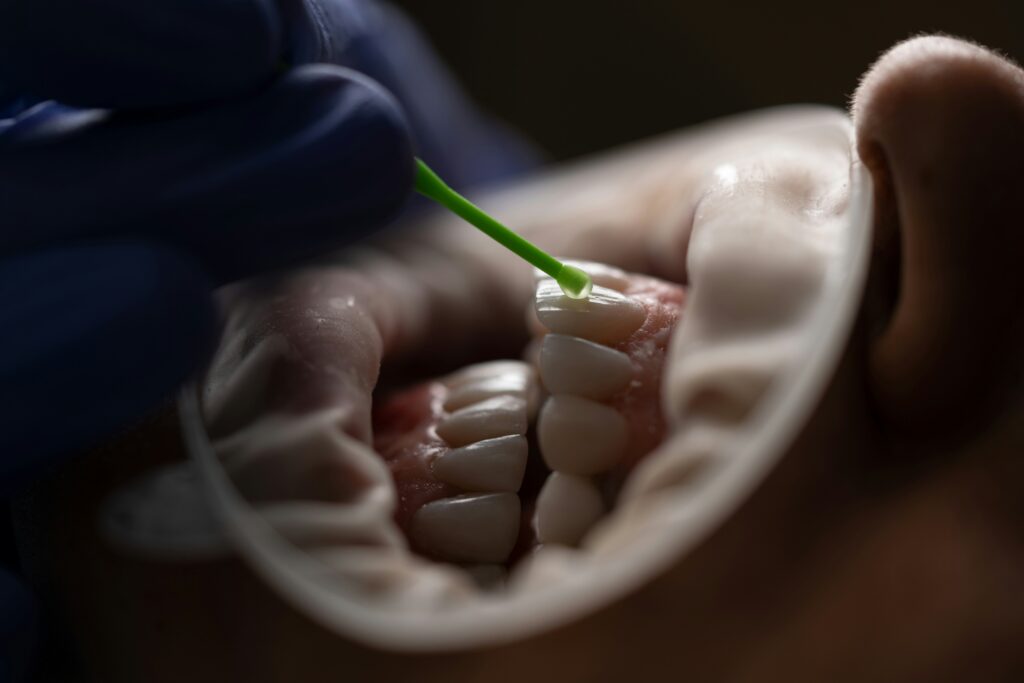
If the filling is damaged or there is decay around it, your dentist may recommend removing the old restoration and placing a new filling.
Tooth-coloured composite fillings can provide a natural-looking result and may be suitable for many situations.
An inlay or onlay
When a tooth has more extensive damage but does not require a full crown, an inlay or onlay may be considered.
These restorations can help restore strength while preserving as much healthy tooth structure as possible.
A dental crown
If a tooth has lost a significant amount of structure, a crown may be considered to restore and protect it.
Root canal treatment
If decay or damage has reached the nerve inside the tooth, replacing the filling alone may not solve the problem.
In that situation, root canal treatment may be recommended to address the infected or inflamed tissue.
Tooth extraction
Extraction is generally considered when a tooth cannot be predictably restored.
Your dentist will assess the condition of the tooth before discussing this option.
But what if my old filling doesn’t hurt?
This is an important point.
No pain does not necessarily mean everything is fine.
Dental problems can sometimes develop before they become painful. You may have decay around a restoration, a small crack or another issue without noticing obvious symptoms.
That is one reason regular dental examinations matter.
Rather than waiting until a tooth becomes painful, routine dental checks allow your dentist to monitor older fillings and look for changes early.
Should you wait until your filling starts hurting?
It is usually better not to.
Think about your filling like a seal around a door. If the seal begins to break down, you may not notice the problem immediately. Waiting until there is obvious water coming through is different from checking the seal when you first notice it changing.
The same idea applies to dental restorations.
If a filling feels different, your tooth has become sensitive, you have pain when biting or you can see damage, arranging an assessment is a sensible next step.
What can you do to protect your fillings?
You cannot make a filling last forever, but you can help protect your teeth and restorations.
Brush twice a day with fluoride toothpaste and clean between your teeth regularly. Limiting frequent sugary foods and drinks can also help reduce the risk of decay.
If you grind or clench your teeth, tell your dentist. Excessive pressure can contribute to wear or damage, and a mouthguard may be considered depending on your situation.
Most importantly, keep up with regular dental examinations so changes can be detected before they become harder to manage.
When should you book a dental appointment?
A dental check is worth arranging if you have noticed:
• Pain when biting
• New or worsening sensitivity
• A chipped or cracked filling
• A rough or sharp edge
• Food constantly getting stuck around the filling
• Discolouration around the filling
• A filling that feels loose
• Toothache that keeps returning
And if you have severe tooth pain, facial swelling, significant swelling around the jaw or other concerning symptoms, seek dental care promptly.
Your old filling may be fine — but it is worth checking
You do not need to panic just because you have an old filling.
It may still be doing exactly what it was designed to do.
But if it has started to feel different, become sensitive or painful, or you simply cannot remember when it was last checked, an examination can give you a much clearer answer.
At Hastings Dental Centre in Port Macquarie, our dental team can assess your filling, check the surrounding tooth and explain the treatment options based on what we find.
Sometimes the answer is simply “Let’s keep monitoring it.”
Sometimes a new filling is enough.
And when a tooth needs more support, we can discuss other restorative options.
The key is not guessing from the age of the filling. It is finding out what condition the tooth is actually in.
Worried about an old filling?
Do not wait for a small problem to become a painful one.
Book a dental examination with Hastings Dental Centre, Port Macquarie to have your filling and tooth checked.
Hastings Dental Centre
1/62 William Street, Port Macquarie NSW 2444
Phone: (02) 6583 7211
Email: info@hastingsdentalcentre.com.au
A simple check today can help you understand what your tooth needs next.