









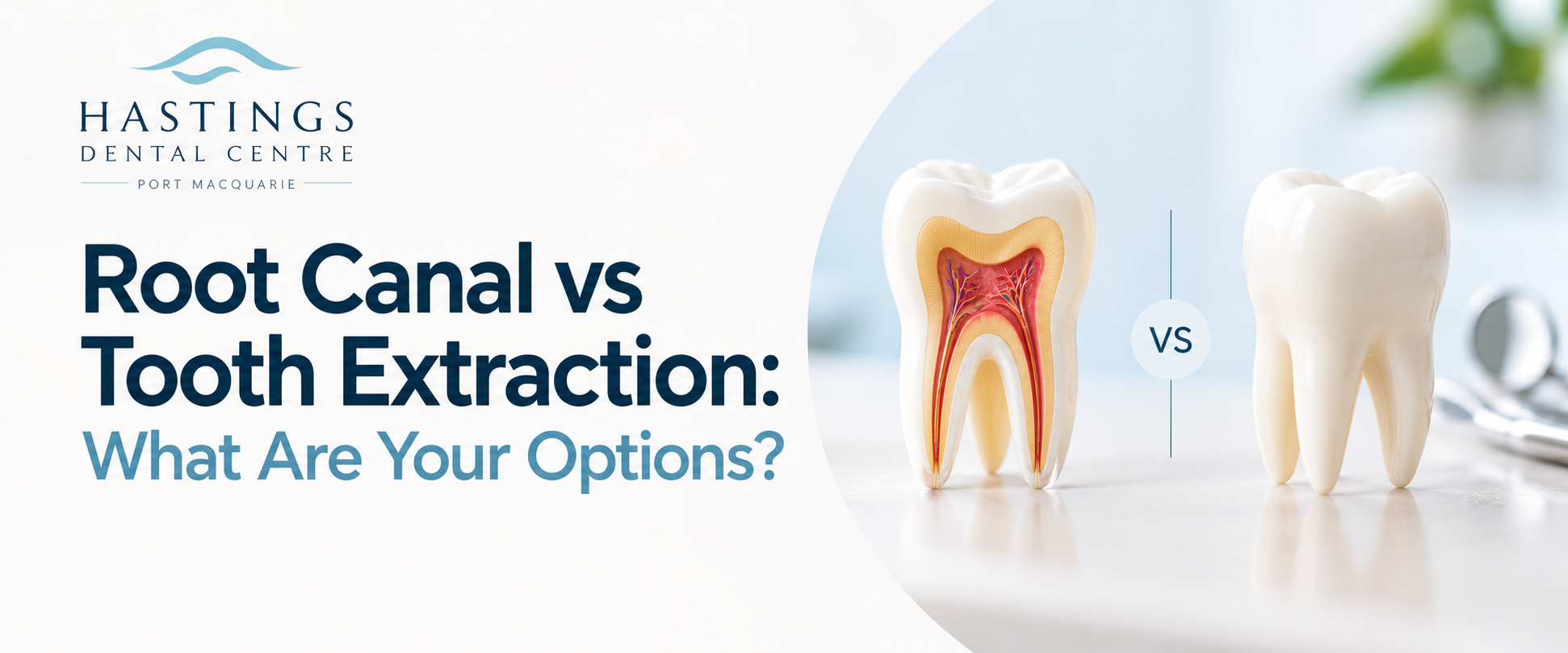
A persistent toothache, deep cavity or cracked tooth can leave you facing a difficult decision: should you save your tooth with root canal treatment or have it extracted?
It’s a common question, especially when a tooth is badly damaged or infected. You might be worried about the pain, treatment cost, recovery time or whether saving the tooth is worth it.
The good news is that a painful or infected tooth does not always need to be removed. In many cases, root canal treatment may help preserve your natural tooth. However, when a tooth is too badly damaged to restore, extraction may be the more suitable option.
Call Hastings Dental Centre on (02) 6583 7211 to arrange an appointment.
Root canal vs tooth extraction: Which is better?
If a tooth can be reliably restored and has adequate gum and bone support, root canal treatment may allow you to keep it. Tooth extraction may be recommended when the tooth cannot be predictably repaired or retained. The decision depends on a dental examination, the extent of damage and your individual oral health.
At Hastings Dental Centre in Port Macquarie, our dental team helps patients understand their options for infected, cracked, decayed or damaged teeth.
Whether you live in Port Macquarie, Lake Cathie, Wauchope, Laurieton, Kempsey, Taree or a surrounding Mid North Coast community, you can contact our clinic to arrange an assessment.
Worried about a painful tooth?
Root Canal vs Tooth Extraction: What's the Difference?
The main difference between root canal treatment and tooth extraction is what happens to your natural tooth.
A root canal treatment removes damaged or infected tissue from inside the tooth while preserving its outer structure and roots.
A tooth extraction removes the tooth from its socket. It may be necessary if the tooth cannot be restored or if removal is the most appropriate treatment.
Root Canal vs Extraction: Quick Comparison
| Treatment factor | Root canal treatment | Tooth extraction |
|---|---|---|
| Main purpose | Treat the damaged or infected pulp and retain the tooth | Remove a tooth that cannot or should not be retained |
| Natural tooth | Preserved | Removed |
| Suitable for | Certain infected or damaged teeth that can be restored | Severely damaged or otherwise unsuitable teeth |
| Procedure | Root canals are cleaned, disinfected and sealed | Tooth is removed from its socket |
| Pain management | Usually performed with local anaesthetic | Usually performed with local anaesthetic |
| Appointments | One or more, depending on complexity | Often one for removal, with follow-up if needed |
| Recovery | Temporary tenderness is common | Initial healing over several days, with longer bone healing |
| Additional treatment | Filling or crown may be recommended | Implant, bridge or denture may be considered |
| Overall cost | Root canal plus any required restoration | Extraction plus any chosen replacement |
| Long-term consideration | Maintenance of the treated tooth | Managing the gap and any replacement |
Neither treatment is automatically right for everyone.
For example, a tooth with deep decay affecting the pulp may be suitable for a root canal if enough healthy structure remains. However, a tooth with a severe vertical root fracture may not be restorable.
Neither treatment is automatically right for everyone.
For example, a tooth with deep decay affecting the pulp may be suitable for a root canal if enough healthy structure remains. However, a tooth with a severe vertical root fracture may not be restorable.
Not sure whether your tooth can be saved?
A dental examination can help identify the cause of your pain and determine which treatments may be appropriate.
What Is Root Canal Treatment?
Root canal treatment, also called endodontic treatment, is a procedure used to treat infection or damage affecting the pulp inside a tooth.
The dental pulp contains nerves, blood vessels and connective tissue. When deep decay, trauma or cracks affect this tissue, it can become inflamed or infected.
In some situations, a standard dental filling is no longer sufficient to treat the problem.
Root canal treatment aims to remove the affected tissue, clean the root canal system and seal the tooth so it can remain functional.
Signs You May Need Root Canal Treatment
Possible symptoms include:
Persistent or severe toothache
Pain when biting or chewing
Sensitivity to hot or cold that lingers
Swelling or tenderness around a tooth
A pimple-like swelling on the gum
A tooth that has darkened after an injury
Deep tooth decay or a crack affecting the pulp
Not every painful tooth requires root canal treatment. Similarly, an infected tooth may sometimes cause little or no pain.
An examination and appropriate dental X-rays help identify the underlying problem.
If you are experiencing these symptoms, learn more about root canal treatment in Port Macquarie.
What Happens During a Root Canal Procedure?
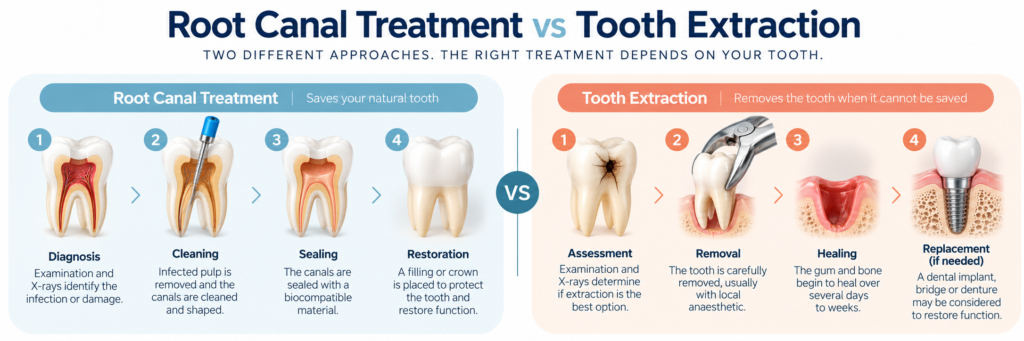
1. Examination and diagnosis
Your dentist examines the tooth, discusses your symptoms and may take X-rays to assess the roots and surrounding tissues.
2. Local anaesthetic
The tooth and surrounding area are numbed to help make treatment comfortable.
3. Accessing the root canals
A small opening is made in the tooth so the dentist can reach the affected pulp.
4. Cleaning the canals
The damaged or infected pulp is removed. The canals are then carefully cleaned and shaped.
5. Sealing the tooth
The prepared canals are filled with a suitable sealing material.
6. Restoring the tooth
A permanent filling or dental crown may be recommended to restore the tooth’s shape, strength and function.
Some cases require multiple appointments. Complex teeth may also need assessment or treatment by an endodontist.
What Are the Benefits of Saving Your Natural Tooth?
When root canal treatment is clinically suitable, preserving the natural tooth may offer several advantages.
Maintain natural chewing function
Keeping your tooth can help preserve your existing bite and allow you to continue chewing with it after appropriate restoration.
Avoid an immediate gap
Extraction leaves a space where the tooth once sat. Root canal treatment aims to retain the tooth in that position.
Reduce the need for tooth replacement
If treatment succeeds and the tooth remains functional, you may not need an implant, dental bridge or denture to replace it.
Preserve your remaining tooth structure
Root canal treatment retains the roots and usable structure of the tooth, although some teeth require a crown afterwards.
However, root canal treatment cannot guarantee that a tooth will last indefinitely. Teeth can fracture, develop new decay or experience recurrent infection and may eventually need further treatment.
Thinking about root canal treatment in Port Macquarie?
When Is Tooth Extraction the Better Option?
Although preserving a natural tooth is often worth considering, there are circumstances where extraction may be the more suitable treatment.
A tooth that cannot be restored predictably may continue to cause problems even after an attempt to save it.
Common Reasons a Tooth May Need Extraction
Severe tooth decay
If decay has destroyed so much tooth structure that a filling or crown cannot provide adequate restoration, the tooth may need removal.
A significant tooth fracture
Some cracks can be managed with a crown or root canal treatment. Others, particularly certain fractures extending into the root, can make the tooth non-restorable.
Advanced gum disease
Severe periodontal disease may damage the tissues and bone supporting a tooth, affecting its long-term stability.
Persistent or complex infection
Some teeth cannot be predictably treated because of extensive damage, previous treatment complications or other clinical factors.
Problematic wisdom teeth
A wisdom tooth may require extraction because of its position, repeated infection, decay or damage to surrounding tissues. Wisdom tooth decisions are different from those involving a useful, restorable tooth.
Other individual treatment needs
Occasionally, tooth removal may be recommended as part of a broader dental treatment plan.
What Happens During Tooth Extraction?
The dentist first examines the tooth and reviews relevant X-rays.
Local anaesthetic is usually given to numb the area. The tooth is then carefully loosened and removed.
Some extractions are relatively straightforward, while others require surgical techniques.
Following removal, your dentist provides instructions to protect the healing socket and reduce the risk of complications.
For further information, read about tooth extraction in Port Macquarie and oral surgery options.
Have a broken or severely damaged tooth?
Contact Hastings Dental Centre to arrange an examination and discuss whether restoration or extraction may be appropriate.
How Does a Dentist Decide Whether a Tooth Can Be Saved?
A tooth that looks badly damaged is not necessarily beyond repair. Equally, a tooth that appears reasonably intact can have problems beneath the gum line.
Your dentist considers several factors before recommending root canal treatment or extraction.
1. How Much Healthy Tooth Structure Remains?
A root canal-treated tooth must still be capable of supporting a suitable restoration.
If there is adequate tooth structure above the gum line, a filling or crown may be possible.
If too little structure remains, or damage extends too far beneath the gum, restoration may be more difficult or unsuitable.
2. Is the Tooth Cracked or Fractured?
The direction, depth and position of a crack matter.
A cracked tooth may be treatable when the damage is limited. A fracture that extends through the root may make the long-term outlook poor.
Learn more about the clinic’s approach to damaged and cracked teeth.
3. Is There an Infection?
An infected tooth may be suitable for root canal treatment if it can be restored.
An abscess does not automatically mean extraction is required, but it does mean the source of infection needs professional treatment.
Your dentist will assess the infection, tooth structure and surrounding tissues before recommending an appropriate approach.
4. Are the Gums and Jawbone Healthy?
A tooth needs adequate supporting tissues.
Advanced gum disease, bone loss or significant mobility can influence whether keeping the tooth is realistic.
5. Can the Tooth Function After Treatment?
A successful root canal alone does not guarantee a functional tooth.
The remaining structure must withstand normal biting forces, and the final restoration should provide appropriate protection.
6. What Are the Long-Term Treatment Costs?
Your dentist may compare the costs and expected maintenance of root canal treatment with those of extraction and any tooth replacement.
For example, an extraction followed by a dental implant involves a different treatment pathway from a root canal followed by a crown.
7. What Are Your Preferences and Overall Dental Needs?
Your preferences, oral health, medical history, treatment complexity and financial circumstances also contribute to the decision.
The most useful question is not simply, “Should I pull the tooth?” It is, “Can this tooth be predictably restored, and what are the alternatives if it cannot?”
At Hastings Dental Centre, you can arrange an assessment to discuss the possible benefits, limitations and costs of the treatments appropriate for your tooth.
Root Canal vs Tooth Extraction Cost in Australia
Cost is often one of the first concerns patients have when choosing between a root canal and an extraction.
An extraction may have a lower initial fee than root canal treatment. However, if the missing tooth is subsequently replaced, the overall expense may be greater.
The most useful comparison is the total cost of treatment, including any restoration or replacement.
What Affects Root Canal Treatment Costs?
Root canal fees depend on several factors:
Whether the affected tooth is a front tooth, premolar or molar
The number of root canals and their complexity
The extent of damage or infection
Whether previous treatment has been performed
Whether specialist care is required
Whether a permanent filling or crown is needed afterwards
Molar root canals can be more complex because back teeth often have multiple canals.
What Affects Tooth Extraction Costs?
Extraction costs may depend on:
Whether the procedure is simple or surgical
The tooth’s position and root shape
Whether the tooth is broken or impacted
The need for imaging or other procedures
Whether a replacement tooth is planned
Root Canal vs Extraction: Comparing the Full Cost
| Potential expense | Root canal pathway | Extraction pathway |
|---|---|---|
| Dental examination and X-rays | May be required | May be required |
| Main procedure | Root canal treatment | Tooth removal |
| Final restoration | Filling or crown if indicated | Not applicable to extracted tooth |
| Tooth replacement | Usually not required if tooth is retained | May include implant, bridge or denture |
| Follow-up | Reviews and maintenance | Healing review and possible replacement appointments |
| Future treatment | Possible repair, retreatment or replacement | Replacement maintenance or future treatment |
Is Tooth Extraction Cheaper Than a Root Canal?
A straightforward extraction may cost less at the time of treatment.
However, the cost of replacing the missing tooth can make extraction followed by replacement more expensive overall.
This does not mean every extracted tooth needs replacing, or that root canal treatment is always the more economical option.
The most appropriate way to compare costs is through an individual assessment and an itemised treatment estimate.
Does Private Health Insurance Cover Root Canal Treatment?
Some Australian private health insurance extras policies provide benefits for dental treatment, including certain root canal procedures, extractions or restorative work.
Your out-of-pocket costs depend on your policy, applicable dental item numbers, benefit limits and eligibility.
Hastings Dental Centre provides information about health funds and HICAPS, which may assist eligible patients with claiming available benefits.
Concerned about dental treatment costs?
Contact our team to arrange an examination and discuss a personalised treatment plan.
Request an Appointment and Cost Discussion | Call (02) 6583 7211
Root Canal vs Extraction: Which Is More Painful?
Many people delay dental treatment because they are worried about pain.
Both root canal treatment and tooth extraction are generally performed with local anaesthetic to numb the area.
You may still feel pressure or movement during certain stages. If you experience discomfort, let your dentist know.
The amount of discomfort afterwards depends on the procedure, the condition of the tooth and individual healing.
Pain During Root Canal Treatment
The purpose of root canal treatment is to treat damaged or infected pulp tissue.
Local anaesthetic is used, although profound numbness can sometimes be more difficult to achieve in a severely inflamed tooth.
Your dentist will assess comfort throughout the procedure and may use additional anaesthetic when appropriate.
Pain After Root Canal Treatment
Temporary tenderness around the treated tooth is common, especially if there was significant infection or inflammation beforehand.
Discomfort often improves over the following days.
Persistent or worsening symptoms should be reviewed.
For more information, read Pain Around a Root Canal Tooth: Could Periodontal Disease Be the Cause?.
Pain After Tooth Extraction
Following an extraction, the gum and surrounding tissues need time to heal.
Mild to moderate pain, tenderness and swelling can occur, with surgical extractions sometimes requiring a longer recovery period.
Your dentist will explain suitable aftercare and when to seek further assistance.
If severe pain develops or increases several days after extraction, contact your dentist. Problems such as dry socket may require assessment.
Dental anxiety should not prevent you from discussing your options.
If you feel nervous about root canal treatment or tooth removal, tell the Hastings Dental Centre team when arranging your appointment.
Recovery After Root Canal Treatment
After root canal treatment, temporary sensitivity or tenderness may occur.
Many people can return to normal daily activities relatively quickly, depending on their symptoms and the complexity of treatment.
Until the final restoration is completed, your dentist may advise avoiding hard chewing on the affected tooth.
Follow any instructions about temporary fillings, medications and review appointments.
Recovery After Tooth Extraction
After an extraction, a blood clot forms in the socket and plays an important role in healing.
Your dentist may advise you to:
Avoid disturbing or rinsing the socket vigorously during the first 24 hours
Avoid smoking or vaping, which can interfere with healing
Avoid drinking through a straw immediately after extraction
Choose soft foods initially
Avoid strenuous exercise for the period recommended
Take prescribed or recommended medications as directed
Follow instructions about cleaning your teeth and the extraction area
Initial healing commonly takes several days, while deeper gum and bone healing continues for longer.
Instructions vary depending on the extraction and your medical circumstances.
Which Treatment Has the Faster Recovery?
After an uncomplicated root canal, you may experience only temporary tenderness. An extraction requires socket healing, and some patients experience more post-operative discomfort.
However, recovery differs between individuals and procedures. A complex root canal or a simple extraction may have different requirements.
Your dentist can explain what recovery is likely to involve in your case.
Need to arrange treatment around work or travel?
Contact Hastings Dental Centre to discuss the likely appointment requirements before booking.
What Happens If You Have a Tooth Extracted and Don’t Replace It?
Losing a permanent tooth can affect more than your smile.
Depending on which tooth is removed, leaving the gap may affect chewing, appearance, bite function and the position of neighbouring teeth.
Possible changes include movement of adjacent teeth and changes in the jawbone around the extraction site.
However, not every extracted tooth needs replacement. For example, some wisdom teeth and selected other teeth may not require it.
If replacement is recommended, your dentist can explain the available options.
Option 1: Dental Implants
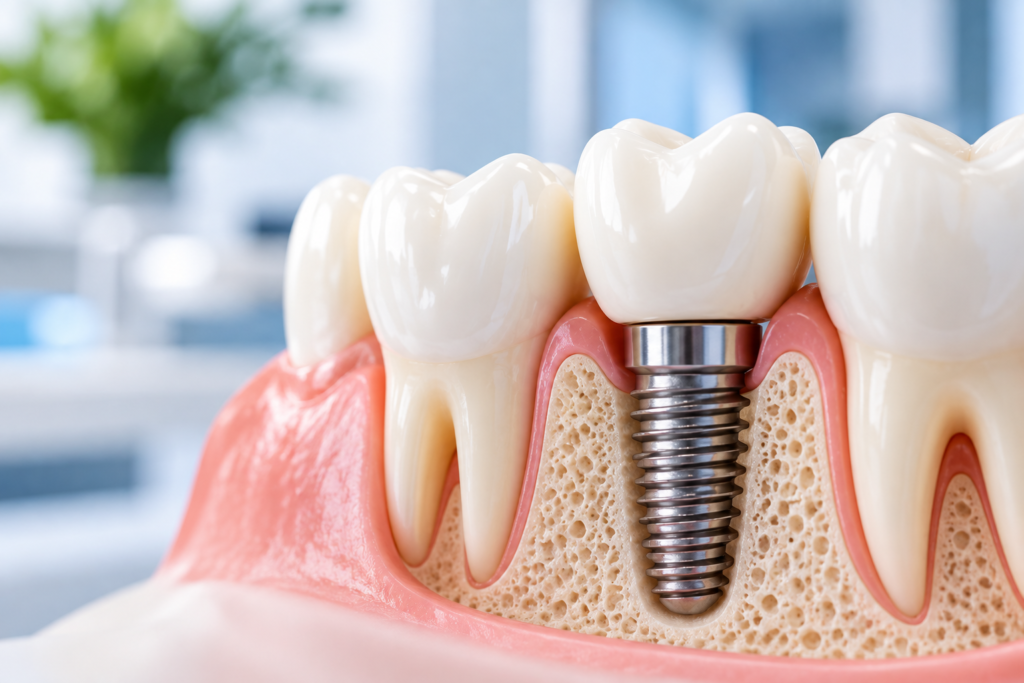
A dental implant is a titanium or other biocompatible fixture placed into the jawbone to support a replacement tooth.
For suitable patients, an implant-supported crown can provide a fixed option for replacing a missing tooth.
Dental implants require adequate bone and healthy surrounding tissues, and not every patient is a suitable candidate.
Learn more about dental implants in Port Macquarie.
Option 2: Dental Bridges
A dental bridge replaces a missing tooth using appropriate neighbouring teeth or implants for support.
Depending on the type of bridge, the teeth next to the gap may require preparation.
Read more about dental crowns and bridges.
Option 3: Removable Dentures
A removable partial denture may be suitable for replacing one or several missing teeth.
The best option depends on your oral health, number of missing teeth, chewing needs and preferences.
Should You Consider an Implant Instead of Root Canal Treatment?
If your natural tooth can be predictably saved, root canal treatment may be worth considering before extraction and implant placement.
However, an implant can be an appropriate solution when the tooth cannot be retained.
Your dentist should explain the potential risks, benefits, maintenance requirements and expected costs of both pathways.
Already missing a tooth or considering extraction?
Can an Infected Tooth Be Saved Without Extraction?
Yes, some infected teeth can be saved with root canal treatment.
An infection inside the root canal system does not automatically make extraction necessary.
If sufficient healthy tooth structure remains and the tooth has suitable support, root canal treatment may remove the infected tissue and allow the tooth to be retained.
However, the extent of damage and the possibility of successful restoration must be assessed first.
Can Antibiotics Cure an Infected Tooth?
Antibiotics may be prescribed in selected circumstances, particularly when there are signs of spreading or systemic infection.
However, they do not replace treatment of the underlying dental problem.
Definitive treatment may involve root canal therapy, drainage, extraction or another approach based on the diagnosis.
The NSW Emergency Care Institute explains that root canal treatment or extraction is usually needed to remove the source of an established dental infection.
When Should You Seek Urgent Dental Care?
Arrange prompt dental assessment if you have:
Severe or persistent tooth pain
Swelling around a tooth or gum
Pain that makes eating or sleeping difficult
A broken tooth with significant pain
Fever or feeling unwell alongside dental symptoms
A suspected dental abscess
For professional assessment of urgent dental problems, see our emergency dental care in Port Macquarie page or call the clinic to confirm appointment availability.
Important: If swelling affects your breathing, speaking or swallowing, or spreads towards the eye or neck, seek emergency medical care immediately. Call 000 in a medical emergency.
Root Canal or Tooth Extraction? Three Situations Worth Understanding
Every tooth is different, but these examples explain how a dentist may approach the decision.
Situation 1: A Deep Cavity Has Reached the Tooth’s Pulp
Imagine you have a molar with deep decay and persistent pain.
If enough healthy structure remains and the tooth has adequate support, root canal treatment followed by an appropriate restoration may be an option.
If decay has destroyed too much structure, extraction may need to be considered.
The deciding factor: Whether the tooth can be successfully treated and restored.
Situation 2: A Tooth Has Cracked While Chewing
A cracked tooth may cause sharp pain when biting.
The treatment depends on how deep the crack extends and which structures are affected.
Some cracked teeth may be treated with a crown, while others may require root canal treatment. Certain extensive fractures may require extraction.
The deciding factor: The location, direction and extent of the fracture.
Situation 3: A Previously Treated Tooth Is Painful Again
A tooth that has already received root canal treatment may occasionally develop pain or another problem.
Possible causes include recurrent infection, a crack, gum disease or a problem with the restoration.
Retreatment, specialist endodontic care, other dental treatment or extraction may be considered after assessment.
The deciding factor: The cause of the symptoms and the likely prognosis of further treatment.
These examples are educational only. They cannot determine the correct treatment for an individual tooth.
Have you been told your tooth needs extraction?
An examination can help you understand whether tooth-preserving options are suitable and what alternatives are available.
Root Canal and Tooth Extraction Assessments in Port Macquarie
If you’re experiencing an infected, decayed, cracked or painful tooth, Hastings Dental Centre offers dental examinations and treatment discussions at its Port Macquarie clinic.
Our team can assess your concerns, explain suitable treatments and discuss what the next steps may involve.
Dental Care for Port Macquarie Patients
Patients living in Port Macquarie can contact our team about toothache, infected teeth, root canal treatment, extractions, crowns and tooth replacement.
If you have severe pain or swelling, call to discuss the next available suitable appointment.
Lake Cathie and Bonny Hills Patients
If you live in Lake Cathie or Bonny Hills and are concerned about a damaged or infected tooth, our Port Macquarie clinic welcomes enquiries.
You can learn more about dental care for Lake Cathie patients before arranging your visit.
Wauchope and Thrumster Patients
Patients from Wauchope and Thrumster can contact Hastings Dental Centre to discuss dental pain, damaged teeth and treatment options.
If several appointments may be required, our reception team can help explain the likely scheduling arrangements.
Lakewood, Laurieton and Camden Haven Patients
If you are travelling from Lakewood, Laurieton or Camden Haven, contact the practice before your visit to confirm appointment availability.
Our team can help you arrange an initial examination to discuss root canal treatment, tooth extraction and other appropriate restorative options.
Read more about dental care for Lakewood patients.
Kempsey Patients
Patients travelling from Kempsey are welcome to contact Hastings Dental Centre in Port Macquarie about assessments for painful or damaged teeth.
Because treatment may require more than one appointment, it is helpful to discuss your symptoms and visit requirements with reception beforehand.
Taree Patients
Patients from Taree and the Manning Valley can also contact our clinic to arrange dental examinations and discuss appropriate treatment options.
If you have been advised to consider a root canal or extraction, our team can explain how to arrange a consultation.
Read our information about dental care for Taree patients.
Our dental clinic is located at 1/62 William Street, Port Macquarie, NSW 2444. All appointments discussed on this page take place at our Port Macquarie practice.
Book an Appointment | Call (02) 6583 7211
Frequently Asked Questions
1. Is it better to have a root canal or tooth extraction?
When a tooth can be predictably restored, root canal treatment may be an appropriate way to preserve it. Extraction may be recommended when the tooth cannot be saved or retained. A dentist must assess the tooth before recommending either option.
2. Can a badly infected tooth still be saved?
Sometimes. Root canal treatment may save an infected tooth if it has sufficient remaining structure and suitable support. However, severe fractures, extensive decay or other complications may make extraction more appropriate.
3. How do I know if my tooth needs a root canal or extraction?
Symptoms alone cannot determine the correct treatment. A dental examination, often supported by X-rays and diagnostic tests, helps establish the condition of the tooth and whether it is restorable.
4. Is pulling a tooth cheaper than getting a root canal?
A simple extraction may cost less initially. However, replacing the missing tooth with a dental implant, bridge or denture can increase the overall cost. Compare the complete treatment plans rather than only the procedure fees.
5. Is root canal treatment more painful than extraction?
Both procedures usually involve local anaesthetic. Discomfort during and after treatment varies. Root canal treatment may cause temporary tenderness, while extraction involves healing of the socket and surrounding tissues.
6. How long does recovery take after a root canal compared with extraction?
After root canal treatment, mild tenderness may improve over a few days. After extraction, initial healing generally takes several days, with gum and bone healing continuing longer. Recovery varies with treatment complexity and individual health.
7. Does a root canal-treated tooth always need a crown?
No. Whether a crown is needed depends on the tooth’s location, remaining structure, size of existing fillings and biting forces. Back teeth often need additional protection, but the final restoration is chosen individually.
8. Can I choose extraction instead of root canal treatment?
Patients can discuss treatment preferences and alternatives with their dentist. However, a dentist must explain the likely consequences of tooth removal, possible replacement needs and whether extraction is clinically appropriate.
9. Can root canal treatment fail?
Yes. Although root canal treatment can successfully retain many teeth, infection may recur, a tooth may fracture or additional treatment may become necessary. Your dentist can explain the prognosis of your individual tooth.
10. Do I need a dental implant after tooth extraction?
Not necessarily. Some gaps do not require replacement. In other cases, an implant, bridge or denture may be recommended to restore function or appearance. The decision depends on the location of the missing tooth and your oral health.
11. Can an abscessed tooth be treated without extraction?
Some abscessed teeth can be treated with root canal therapy or another appropriate dental procedure. The dentist must identify the source of infection and determine whether the tooth is suitable for preservation.
12. Can I have an implant immediately after tooth extraction?
Immediate implant placement may be possible in selected cases, but it is not suitable for everyone. The condition of the bone, gums, infection and surrounding structures influences the timing of implant treatment.
13. How long can a tooth last after root canal treatment?
A root canal-treated tooth may remain functional for many years with an appropriate restoration and ongoing care. Longevity depends on the original condition of the tooth, the quality of treatment, oral hygiene and future dental problems.
14. Will private health insurance cover root canal treatment or extraction?
Private health insurance benefits depend on your extras policy, treatment items, annual limits and eligibility. Contact your health fund for details and ask our team about HICAPS processing.
15. Can I book a root canal or tooth extraction assessment near Lake Cathie, Wauchope, Kempsey or Taree?
Yes. Hastings Dental Centre welcomes patients from these communities at our Port Macquarie clinic. Contact the practice to discuss your dental concern and arrange an appropriate examination.
Book a Root Canal or Tooth Extraction Assessment at Hastings Dental Centre
A painful, infected or badly damaged tooth can be worrying, especially when you’re unsure whether it needs to be saved or removed.
Root canal treatment may help preserve a natural tooth when it can be predictably restored. Extraction may be necessary when the tooth is too damaged or cannot be retained.
The important first step is understanding the condition of your tooth and discussing the options that are appropriate for you.
At Hastings Dental Centre, our dental team can examine your tooth, explain possible treatments and discuss expected costs and follow-up care.
Don’t make the decision based on pain or cost alone. Have the tooth assessed and understand your options.
Book a Tooth Assessment at Hastings Dental Centre
Call Our Port Macquarie Dental Clinic: (02) 6583 7211
Address: 1/62 William Street, Port Macquarie, NSW 2444
Opening hours: Monday to Thursday, 8 am to 5 pm; Friday, 8 am to 1 pm. Saturday by appointment, subject to confirmation.