






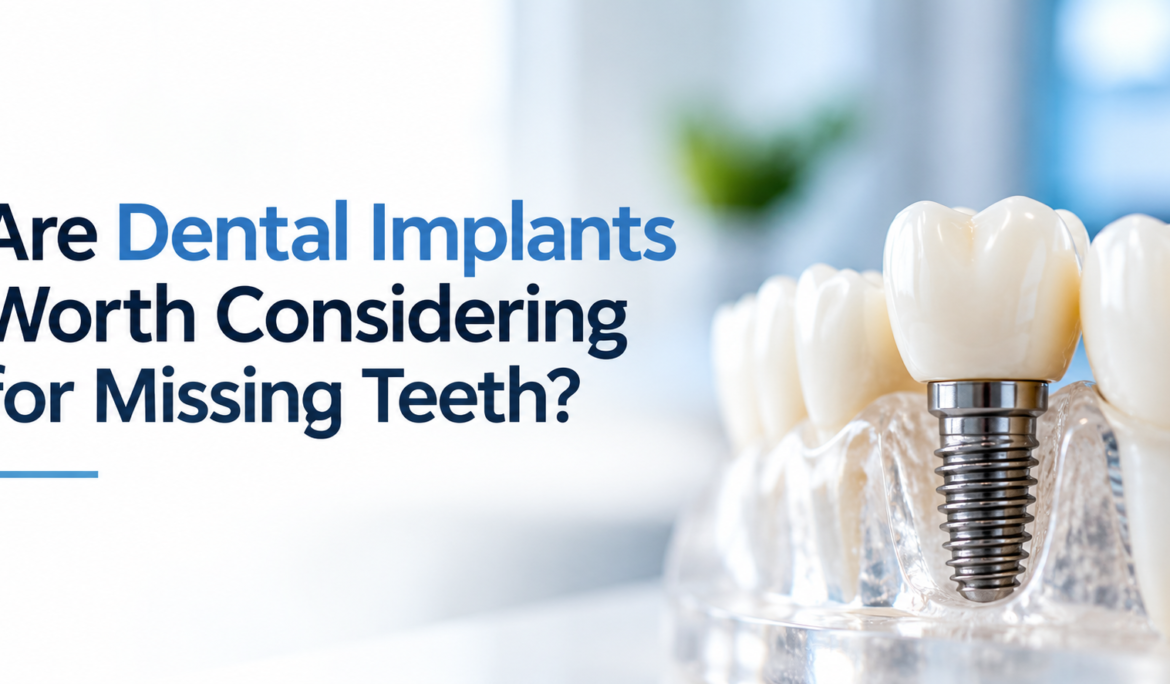
Losing a tooth can affect more than your smile. A missing tooth can make eating harder, change the way your remaining teeth meet and, in some cases, contribute to changes in the surrounding bone. For people who want a longer-term replacement option, dental implants may be worth considering.
Dental implants are designed to replace the tooth root as well as the visible tooth. They can support a dental crown, bridge or other restoration, depending on how many teeth are missing and your individual oral health.
But are dental implants the right choice for everyone?
Not necessarily. The best option depends on factors such as your oral health, available bone, medical history, number of missing teeth, treatment goals and budget.
Call Hastings Dental Centre on (02) 6583 7211 to arrange an appointment.
What is a dental implant?
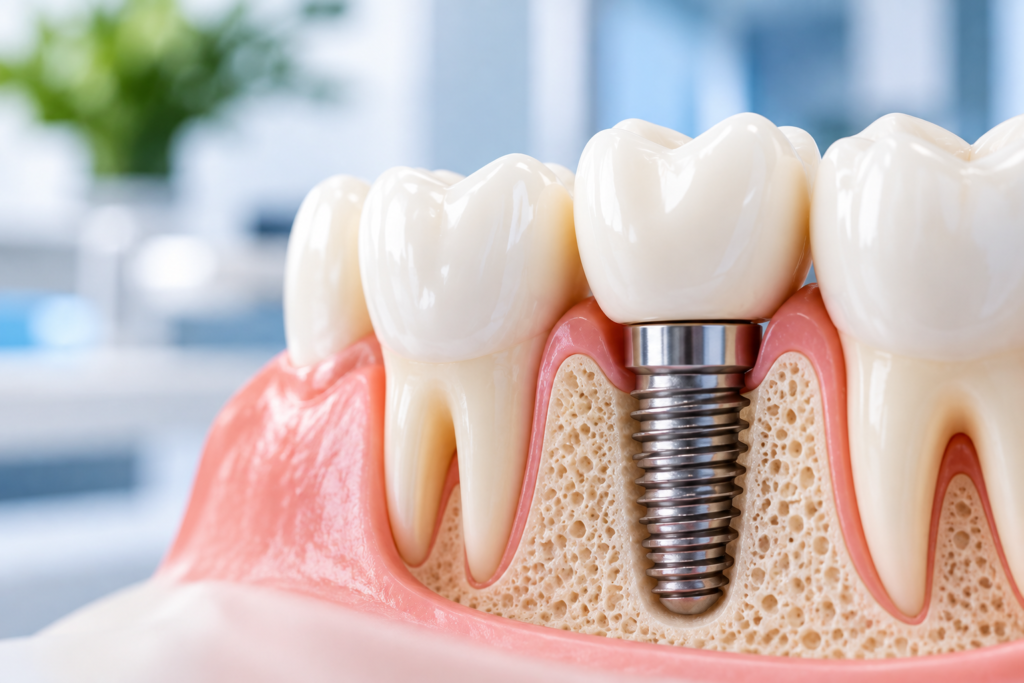
A dental implant is a small post placed into the jawbone to replace the root of a missing tooth.
Once the implant has integrated with the surrounding bone, it can support a restoration such as a crown.
A typical single-tooth implant involves:
- Assessment and treatment planning
- Implant placement
- A healing period
- Placement of the final restoration
Your dentist will assess your teeth, gums and jaw before recommending whether an implant is suitable.
Why consider dental implants for missing teeth?
1. They can replace a single missing tooth
If you have lost one tooth, an implant-supported crown can provide an option that replaces the missing tooth without relying on the neighbouring teeth for support.
2. They can help restore chewing function
A missing tooth can make certain foods more difficult to eat. Replacing the tooth can help restore function, although the outcome depends on your individual circumstances and the final restoration.
3. They can provide a fixed tooth replacement
Unlike removable dentures, an implant-supported restoration is designed to remain in place.
For many patients, this can make everyday activities such as eating and speaking feel more natural.
4. They can help maintain the jawbone around the missing tooth
The tooth root normally provides stimulation to the surrounding bone. After tooth loss, the bone in that area can gradually reduce.
An implant is placed into the jawbone and can provide a form of root replacement. Your dentist will need to assess whether there is sufficient bone for implant placement.
5. They can be used for more than one missing tooth
Dental implants aren’t limited to replacing one tooth.
Depending on your circumstances, implants may be used to support:
- Single crowns
- Implant-supported bridges
- Implant-retained dentures
- Multiple missing teeth
Your dentist can discuss which approach is appropriate after an examination and assessment.
Are dental implants better than dentures or bridges?
There isn’t one tooth replacement option that is right for every patient.
Dental implants
Implants are fixed into the jaw and can support individual crowns, bridges or other restorations.
They may be suitable for patients who want a fixed replacement and have suitable oral and general health.
Dental bridges
A bridge can replace one or more missing teeth by using neighbouring teeth or implants for support.
A conventional bridge may be an option when an implant isn’t suitable or when another treatment approach is preferred.
Dentures
Dentures can replace several missing teeth or a full arch of teeth.
They can be removable and may be appropriate for patients who need a broader tooth replacement solution.
The right choice depends on your dental condition, treatment goals, preferences and budget.
Missing a tooth? Talk to Hastings Dental Centre
Hastings Dental Centre provides dental implant consultations in Port Macquarie for patients considering options for missing teeth.
Dr Tarek Rashdan has postgraduate training in implant dentistry and an interest in dental implants and aesthetic rehabilitation.
If you’re considering replacing a missing tooth, the first step is an assessment of your individual situation.
Book a dental implant consultation at Hastings Dental Centre in Port Macquarie.
Who may be suitable for dental implants?
Dental implants may be considered for adults who have:
- One or more missing teeth
- Healthy or treatable gums
- Adequate bone to support an implant
- Good oral hygiene
- A suitable general health profile
Some patients may require additional treatment before an implant can be placed.
For example, gum disease may need to be treated first. In some cases, additional procedures may also be considered where there isn’t enough bone for implant placement.
A dental examination and appropriate imaging are important before treatment is recommended.
When may dental implants not be suitable?
Implants aren’t automatically suitable for everyone.
Your dentist may need to consider:
- Active gum disease
- Bone loss
- Oral hygiene
- Smoking
- Certain medical conditions or medications
- Previous radiation treatment
- The condition of the remaining teeth
- Your ability to maintain the implant and restoration
This is why an implant consultation should come before deciding on treatment.
How long do dental implants last?
Dental implants are intended to be a long-term tooth replacement option, but they are not maintenance-free.
Their longevity can be affected by factors including:
- Oral hygiene
- Gum health
- Smoking
- Bite forces
- General health
- Regular dental care
- The condition of the implant and restoration
Regular dental examinations and good home care are important for maintaining your oral health and monitoring the implant.
How much do dental implants cost in Australia?
The cost of dental implant treatment varies considerably.
There isn’t one standard price because treatment may involve several components, including:
- Consultation
- Diagnostic imaging
- Implant placement
- Abutment
- Crown or other restoration
- Additional procedures where required
The number of teeth being replaced and the complexity of treatment can also affect the total cost.
Rather than relying on a generic online price, ask your dentist for a treatment plan outlining the procedures and associated costs relevant to your situation.
What happens during a dental implant consultation?
Your dentist will first assess your oral health and discuss your concerns.
Depending on your circumstances, this may include:
- Examination of your teeth and gums
- Assessment of the missing tooth area
- Dental imaging
- Discussion of your treatment options
- Assessment of your suitability for an implant
- Discussion of the expected treatment stages
- Cost and payment information
This gives you an opportunity to understand your options before deciding whether to proceed.
Is a dental implant worth considering for you?
A dental implant can be a useful option for replacing missing teeth, particularly for patients who want a fixed tooth replacement.
However, “worth it” depends on your individual situation.
If you have a missing tooth, the important questions are:
Is an implant clinically suitable for me?
What other treatment options are available?
What will the complete treatment cost?
How long will treatment take?
What maintenance will I need afterwards?
A consultation with a dentist can help answer these questions based on your teeth, gums, bone and overall oral health.
Book a dental implant consultation at Hastings Dental Centre in Port Macquarie.
Call (02) 6583 7211 or contact the clinic to arrange an appointment.