

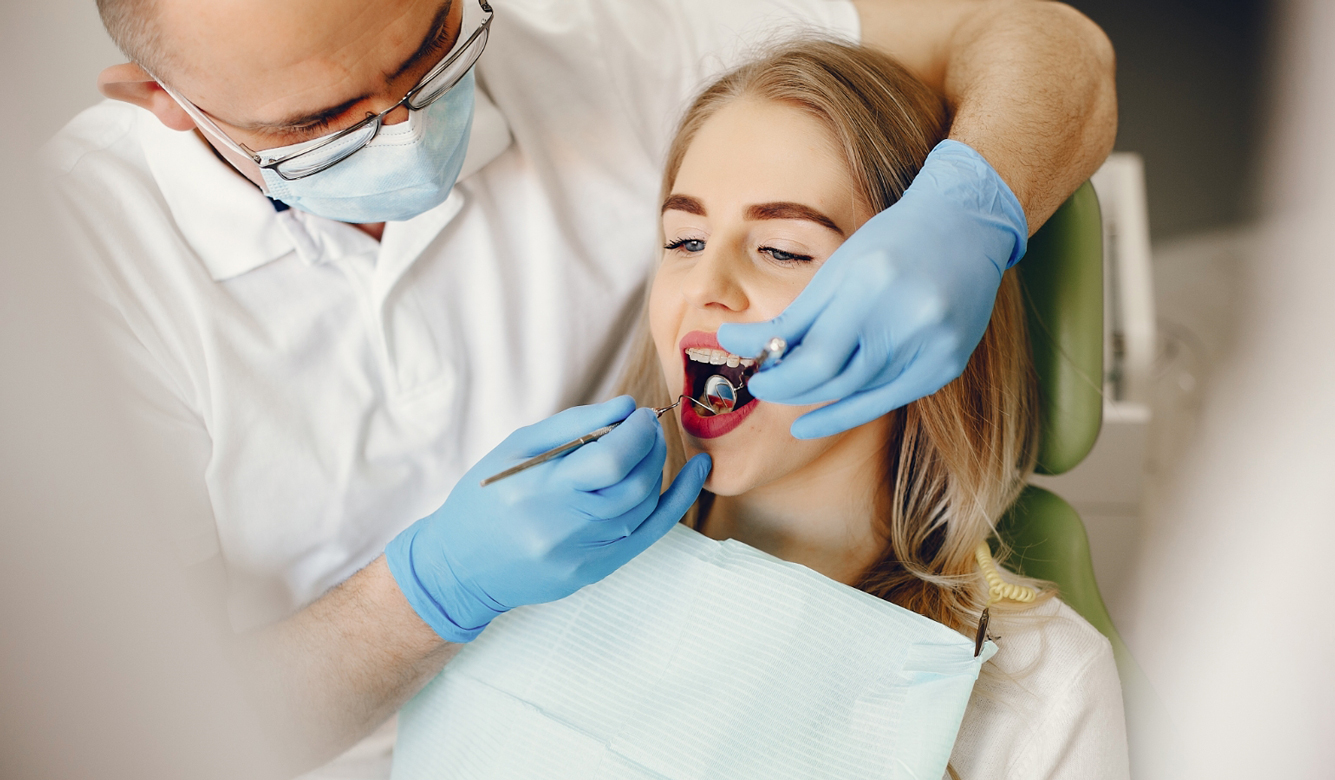
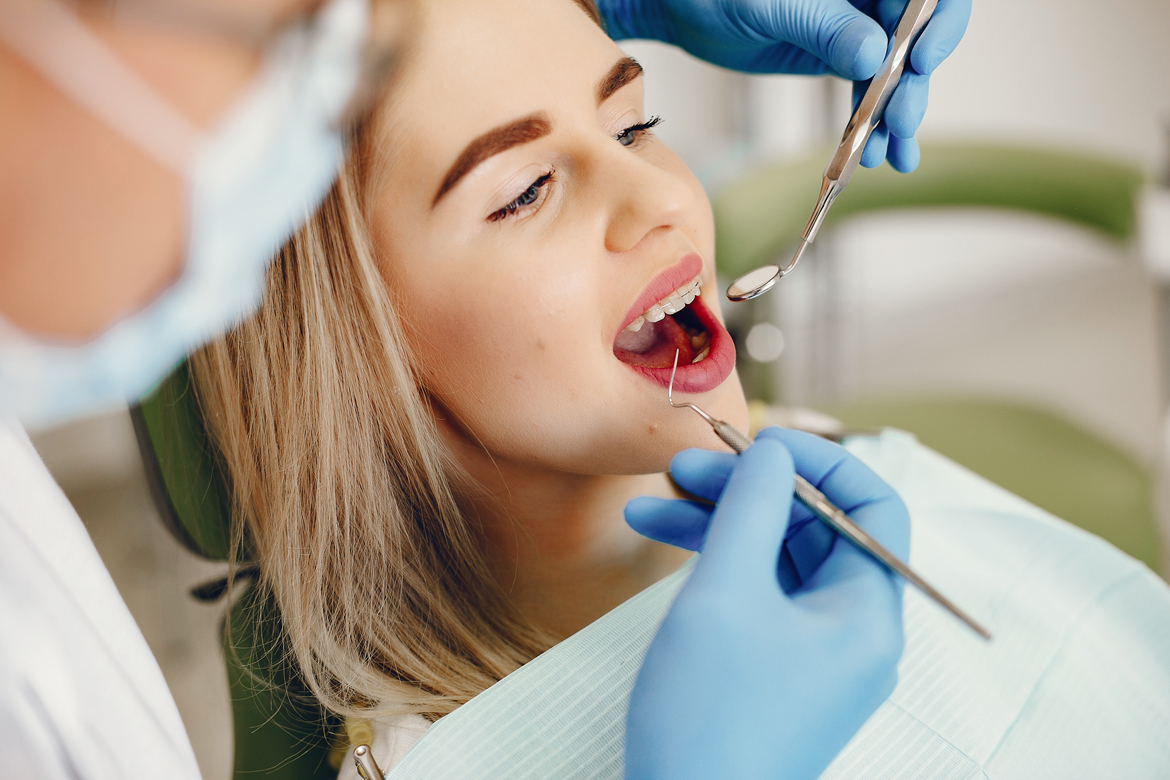


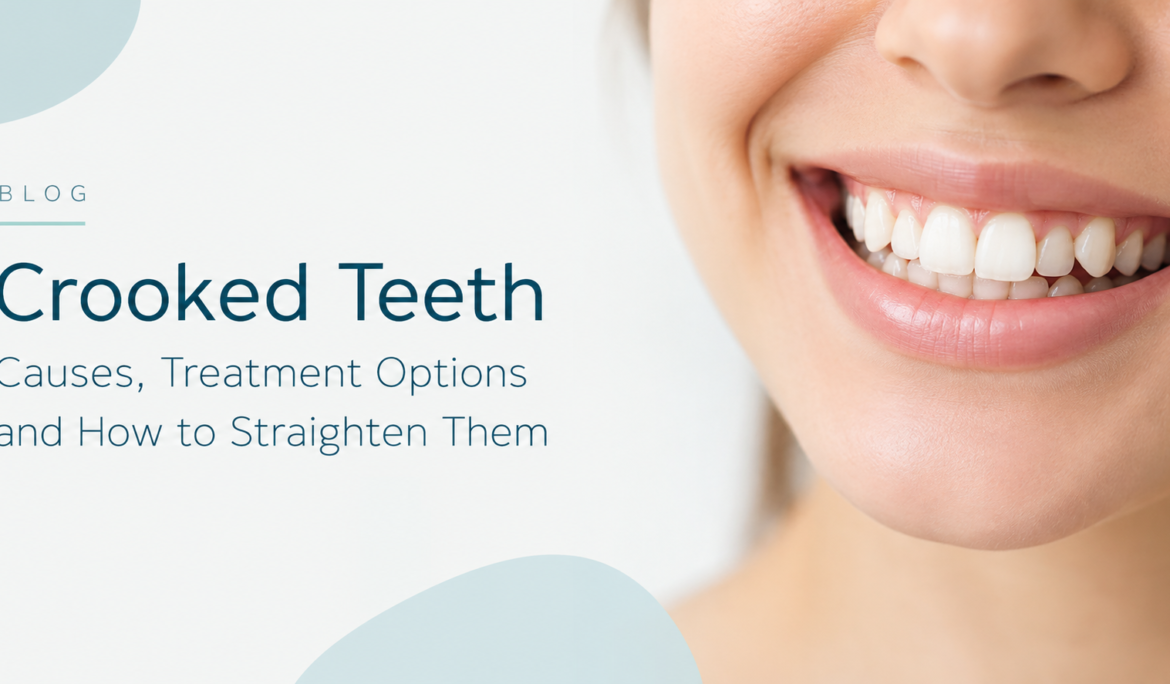
Sometimes it is one tooth that sits further forward than the others. Sometimes your front teeth overlap, there is not enough room in your mouth, or your teeth have gradually moved over the years.

And sometimes you simply do not like the way your smile looks in photographs.

Whatever the reason, you do not have to guess what can be done.

At Hastings Dental Centre in Port Macquarie, a dental assessment can help you understand what is causing the misalignment, whether treatment is appropriate and which teeth-straightening options may be suitable for your individual situation.

Call Hastings Dental Centre on (02) 6583 7211 to arrange an appointment.


What causes crooked teeth?

Several factors can contribute to crooked teeth:

  • Genetics: Jaw size, tooth size and inherited facial structure can affect how teeth fit together.

  • Crowded teeth: When the jaw does not have enough space for all the teeth, some may overlap or rotate.

  • Early or late loss of baby teeth: Losing a baby tooth too early or retaining it for too long can affect the position of permanent teeth.

  • Thumb sucking and prolonged dummy use: Persistent habits during childhood can influence tooth position and jaw development.

  • Impacted teeth: A tooth that cannot erupt normally may affect neighbouring teeth.

  • Changes with age: Teeth can gradually shift over time, even after orthodontic treatment.


Are crooked teeth just a cosmetic problem?

Not always. The effect depends on the degree and type of misalignment.

Possible concern

How it may affect you

Difficulty cleaning

Overlapping teeth can be harder to brush and floss, allowing plaque to build up.

Gum problems

Plaque accumulation may contribute to gum inflammation and periodontal disease.

Uneven tooth wear

Certain bite problems can place extra pressure on some teeth.

Bite difficulties

Misalignment may make chewing or biting less comfortable.

Smile confidence

Some people feel self-conscious about the appearance of their teeth.

Crooked teeth do not automatically cause dental disease or jaw pain. An examination is needed to determine whether alignment is affecting oral health and whether treatment is necessary.


How can crooked teeth be straightened?

The right approach depends on how your teeth are positioned, your bite, your gum health and the amount of movement required.

Ortodoncia invisible o brackets tradicionales | Dr. Cla
 
 
1. Traditional braces
Metal brackets and wires apply gentle pressure to gradually move teeth into better positions. They can address a wide range of alignment and bite problems, including more complex cases.
 
Поставить элайнеры 3D Smile в Омске по доступным ценам - стоматология "Жемчужный слон"
 
 
2. Clear aligners
Custom-made, removable plastic trays gradually move teeth. They are less noticeable than conventional braces and can be removed for eating and cleaning. They are not suitable for every type of misalignment and need to be worn as instructed.
 
Invisalign Wilmington, DE | Clear Braces | Wilmington Orthodontics
 
 
3. Ceramic braces
These work similarly to traditional braces but use tooth-coloured or clear brackets, making them less noticeable. They may be an option for people who prefer fixed braces with a more discreet appearance.
 
Sortchile | ISP advierte posibles riesgos en el uso de alineadores dentales invisibles de venta directa al usuario
 
 
4. Retainers
Retainers are mainly used to maintain tooth positions after orthodontic treatment. In selected cases involving very minor tooth movement, an orthodontist may recommend a retainer-based approach, but retainers are not a substitute for comprehensive treatment when significant correction is needed.
Is Your Old Filling Hurting?

A filling that has started to hurt, feel sensitive or catch food should not be ignored. The cause may be simple, but an examination can help identify whether the filling, tooth or surrounding area needs attention.

Book an appointment with Hastings Dental Centre in Port Macquarie to have your old filling and tooth assessed.

📍 1/62 William Street, Port Macquarie NSW 2444

Our friendly team can help you understand what is happening and discuss the appropriate treatment options for your tooth.

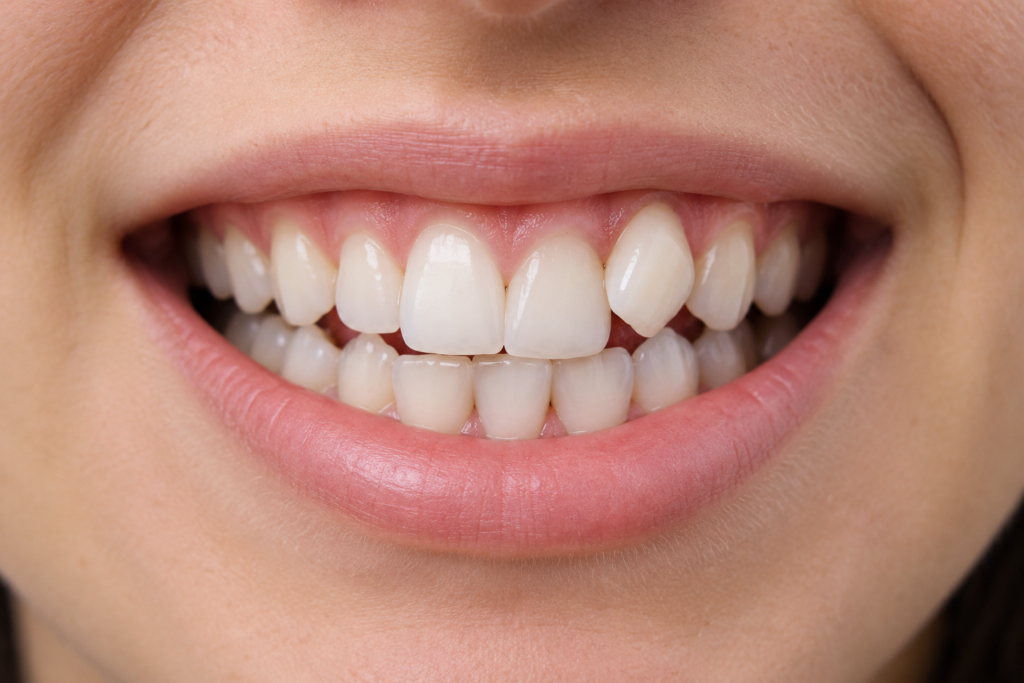
What does crowded or crooked teeth actually look like?

Crooked teeth do not always mean severely overlapping teeth.

You might have:

Overlapping teeth: One tooth may sit in front of or behind another because there is limited space.

Rotated teeth: A tooth may have turned slightly or significantly within the dental arch.

Gaps and spacing: Some people have spaces between their teeth rather than crowding.

Protruding front teeth: The upper front teeth may sit noticeably forward.

Bite problems: The upper and lower teeth may not meet evenly when you close your mouth.

Teeth that have moved with age: Even people who had straight teeth when they were younger can notice changes later in life.

This is one reason an examination is more useful than trying to work out your treatment from pictures online.


Can adults straighten crooked teeth?

Yes, adults can have orthodontic treatment.

There is no rule that teeth straightening is only for teenagers.

Adults may consider treatment because their teeth have shifted, crowding has increased, they are finding certain areas difficult to clean, or they would simply prefer a different smile appearance.

One of the reasons adults often ask about clear aligners is that they can provide a more discreet alternative to conventional braces in suitable cases.

Hastings Dental Centre already provides information about clear aligner treatment for adults and teenagers and notes that not every case is suitable for aligners alone. More complex bite concerns may require a different or combined approach.

That is why the first step should be an assessment rather than choosing an appliance first.


Can clear aligners straighten crooked teeth?

Clear aligners are removable trays designed to gradually move teeth into planned positions.

They can be an option for selected alignment concerns, including some cases involving crowding, spacing and bite-related issues.

They are particularly appealing to people who would prefer a less noticeable orthodontic appliance.

However, clear aligners are not suitable for every patient or every type of tooth movement. The complexity of your alignment and bite needs to be assessed before deciding whether aligners are appropriate.

Hastings Dental Centre offers information about Invisalign and clear aligner treatment in Port Macquarie.

Clear aligners may suit people who:

  • Want a discreet orthodontic option
  • Have certain types of spacing or crowding
  • Prefer removable trays
  • Want to continue brushing and cleaning without fixed brackets
  • Are prepared to follow their dentist’s instructions throughout treatment

The important point is that a clear aligner is a treatment option, not automatically the right treatment for every crooked smile.


What about traditional braces?

Traditional braces remain an established orthodontic option.

They use brackets and wires to apply controlled forces to the teeth. Depending on the case, fixed appliances may be considered where more complex tooth movements are required.

There are also less noticeable fixed options, such as tooth-coloured or ceramic brackets.

The right choice depends on your teeth, bite, treatment requirements, preferences and clinical assessment.

For some people, clear aligners may be appropriate. For others, another orthodontic approach may make more sense.

The goal of the consultation is to explain your options clearly rather than assume one treatment will suit everyone.


What happens when you book an assessment for crooked teeth?

This is where we can make the article much more useful for a potential Hastings Dental Centre patient.

A person searching for “crooked teeth Port Macquarie” usually wants to know what happens next.

Step 1: We discuss what is bothering you

Perhaps one tooth has moved.

Perhaps your front teeth are crowded.

Perhaps you had braces years ago and your teeth have shifted.

Or perhaps you simply want to know whether clear aligners could be an option.

Tell your dentist what you have noticed and what you would like to understand.

Step 2: Your teeth and gums are assessed

Your dentist can check your teeth, gums and bite and consider any existing dental problems that may need attention.

Step 3: Your alignment is considered

Depending on your situation, dental records such as photographs, scans or X-rays may be recommended.

Step 4: Your options are explained

You can ask questions about clear aligners, orthodontic treatment, expected treatment requirements, maintenance and costs.

Step 5: You decide what happens next

A consultation does not mean you have to start treatment immediately.

It gives you information about your current dental situation so you can make an informed decision.


How long does it take to straighten crooked teeth?

There is no single treatment time that applies to everyone.

The timeframe can depend on:

  • How crowded or spaced your teeth are
  • The amount of tooth movement required
  • Your bite
  • The treatment approach
  • Your response to treatment
  • How consistently treatment instructions are followed

Someone with a minor alignment concern may have a very different treatment timeframe from someone who requires more complex orthodontic correction.

Your dentist can discuss the likely process after assessing your teeth rather than giving you a generic timeframe based only on a photograph.


What happens if I leave crooked teeth untreated?

This depends on the individual situation.

A minor alignment issue may not cause a significant functional problem.

However, crowded or overlapping teeth can sometimes make cleaning more difficult. If plaque is repeatedly left around difficult-to-reach areas, maintaining gum health may become more challenging.

Some types of malocclusion can also affect how teeth meet during biting and chewing.

This is why it is worth having your teeth assessed if the alignment has changed, cleaning has become difficult, or you have concerns about your bite.


What about crooked teeth in children?

Parents often notice crowding when permanent teeth begin appearing.

Children’s teeth and jaws are still developing, so an early dental assessment can help monitor how the teeth are erupting and whether there are developing alignment concerns.

Not every child with crooked teeth needs braces immediately.

A dentist can assess the child’s teeth and development and advise whether monitoring, early intervention or an orthodontic assessment may be appropriate.

For families in Port Macquarie, this also makes a good internal link from your Children’s Dentistry content to your orthodontic and clear-aligner information.


Can teeth become crooked again after braces or aligners?

Yes, teeth can move after orthodontic treatment.

That is why retainers are commonly used after active orthodontic treatment to help maintain the position of the teeth.

If you previously had braces or aligners and have noticed your teeth becoming crowded again, an assessment can help determine what has changed and what options may be available.


Is Invisalign the same as orthodontic treatment?

Invisalign is a brand of clear aligner system.

Clear aligner treatment generally uses a sequence of removable trays to apply planned tooth movements. Whether this type of treatment is appropriate depends on the individual’s dental and orthodontic requirements.

Hastings Dental Centre has a dedicated Invisalign and clear-aligner service page for Port Macquarie patients.

The clinic also has educational content comparing teeth-straightening options, including clear aligners, ceramic braces and retainers.


Crooked teeth don’t have to be something you keep wondering about

Maybe you have noticed one front tooth moving.

Maybe your lower teeth have become more crowded.

Maybe you avoid smiling in photographs.

Or perhaps your child is beginning to show signs of crowding as their permanent teeth come through.

The next step does not have to be deciding between braces and clear aligners on your own.

Start with an assessment.

At Hastings Dental Centre, our Port Macquarie dental team can assess your teeth and discuss whether teeth straightening or clear aligner treatment may be appropriate for your circumstances.

Call (02) 6583 7211 to book an appointment at Hastings Dental Centre.

Treatment suitability varies between individuals. Your dentist will assess your oral health, tooth alignment and bite before discussing appropriate treatment options.

Book your appointment with Hastings Dental Centre in Port Macquarie.

Leave a Reply